Bruno Alfieri. Publishing and Magazines for Contemporary Art and Architecture
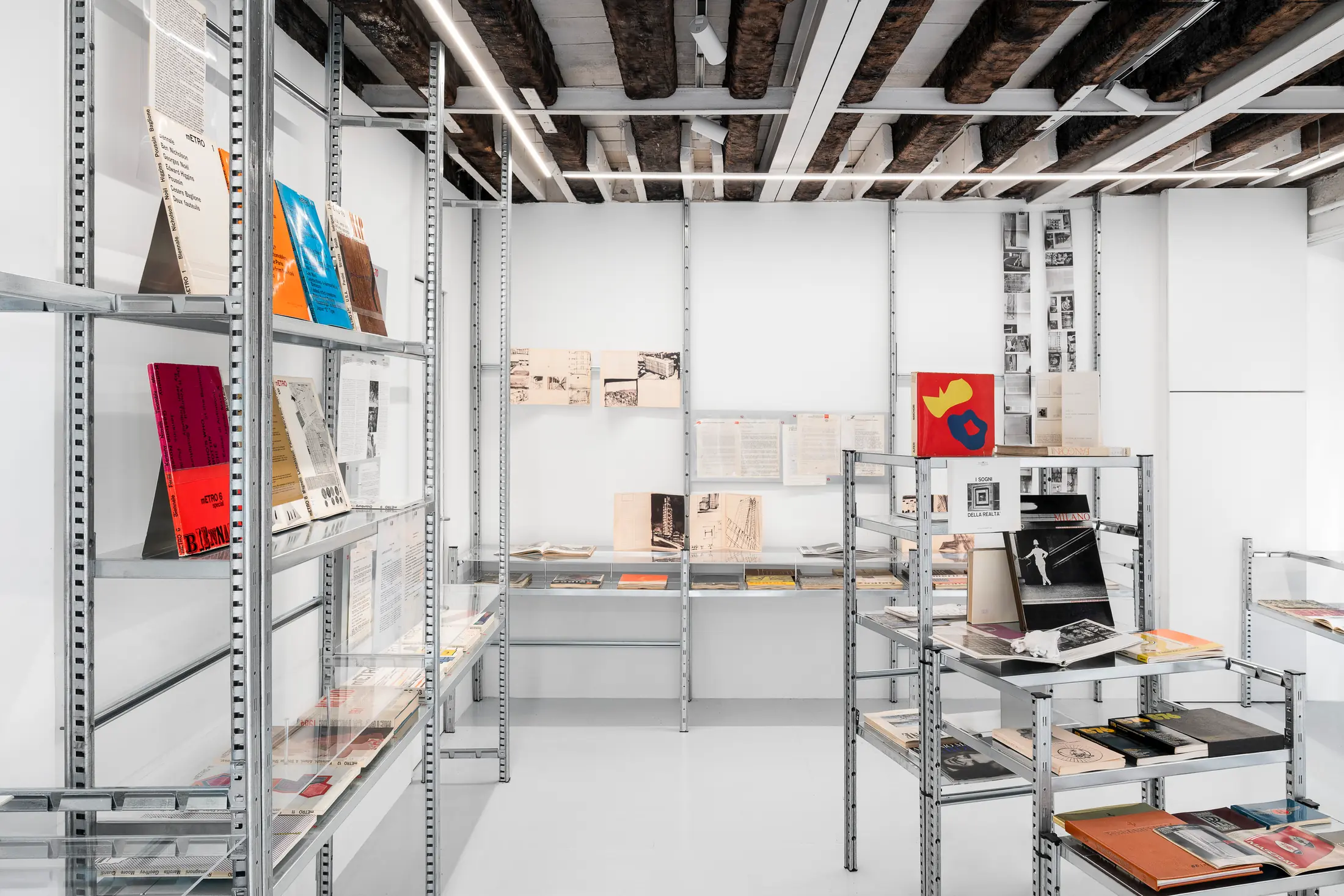
The exhibition highlights the exceptional industriousness of Bruno Alfieri (Naples, 1927 – Milan, 2008), a figure who moved between Milan and Venice and wore many hats: art critic, gallerist, curator—but above all, a publisher and a true artist of publishing. His authorial voice found expression across a wide array of editorial formats dedicated to contemporary art and architecture in Italy.
The exhibition focuses on the period between 1948 and 1973, the year Alfieri Edizioni d’Arte was sold to Electa, while also including traces of his later activities – traces that illustrate a practice which sparked numerous seminal initiatives in the history of publishing and in the artistic and architectural discourse.
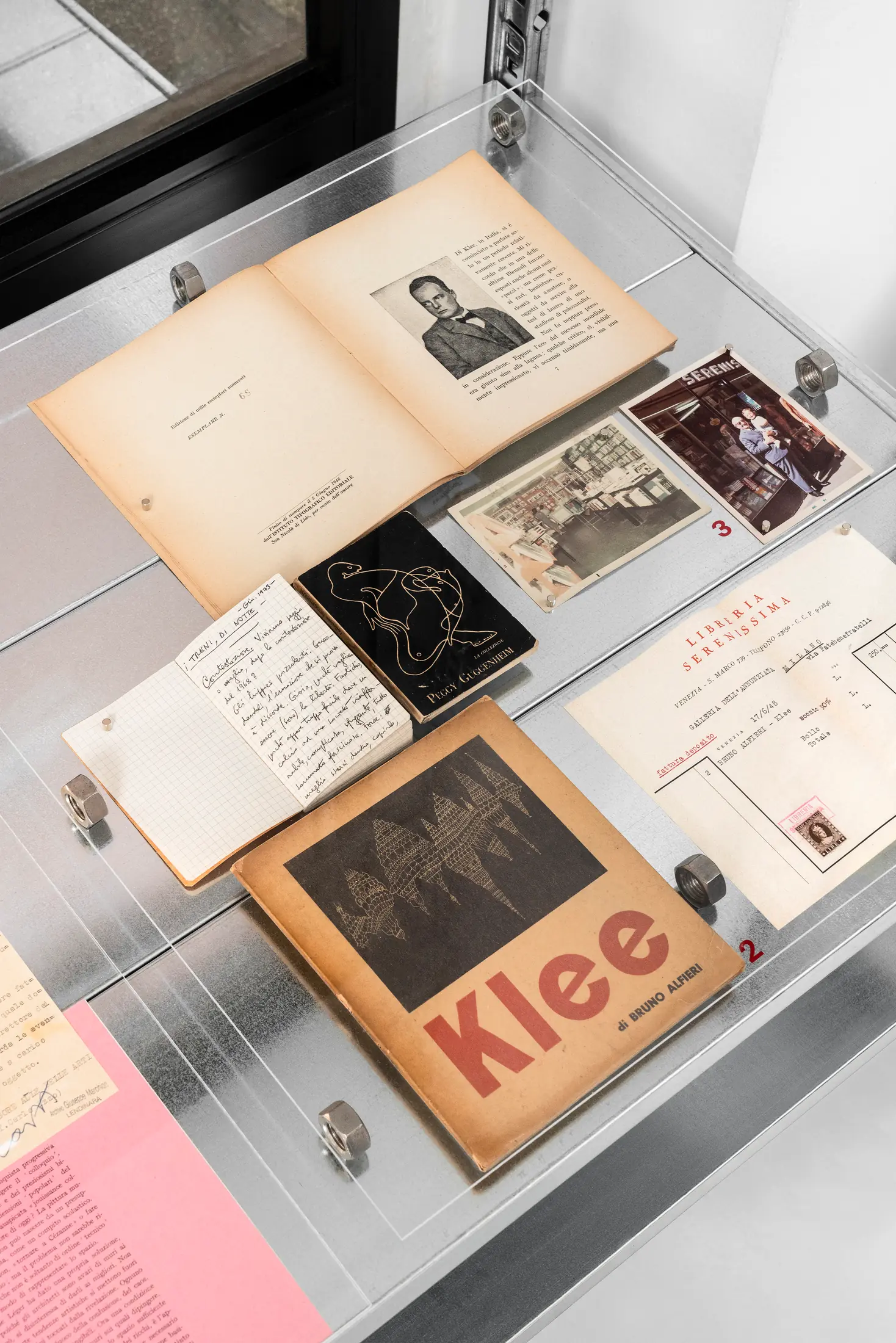
Alfieri began his work in Venice, where in 1938 his father founded the Serenissima bookshop and Alfieri Edizioni d’Arte. He became the publisher of both the magazine and the exhibition catalogs of the postwar Venice Biennale. The city, rich in artistic ferment – not only through the Biennale but also thanks to galleries, artists, and figures like Peggy Guggenheim – offered fertile ground. Alfieri soon launched a series of publishing projects, including the first Italian volume on Paul Klee (1948) and a catalog for the Guggenheim Collection, while also engaging in hybrid activism through the collective "Le Tre Mani," which staged the first Italian exhibition of Jackson Pollock (1950).
Alfieri had a deep, inherited understanding of how the art publishing system worked. He knew a magazine needed to be beautiful “but not snobbish or ‘crazy’.” It had to feature quality photography, precise graphic design, and excellent print production. He understood the importance of wide distribution, bilingual editions, and fostering reader loyalty to ensure commercial success. The ideal publication, in his words, had to be “enjoyable to read and also to look at […] independent, rigorously critical, and passionately polemical.”
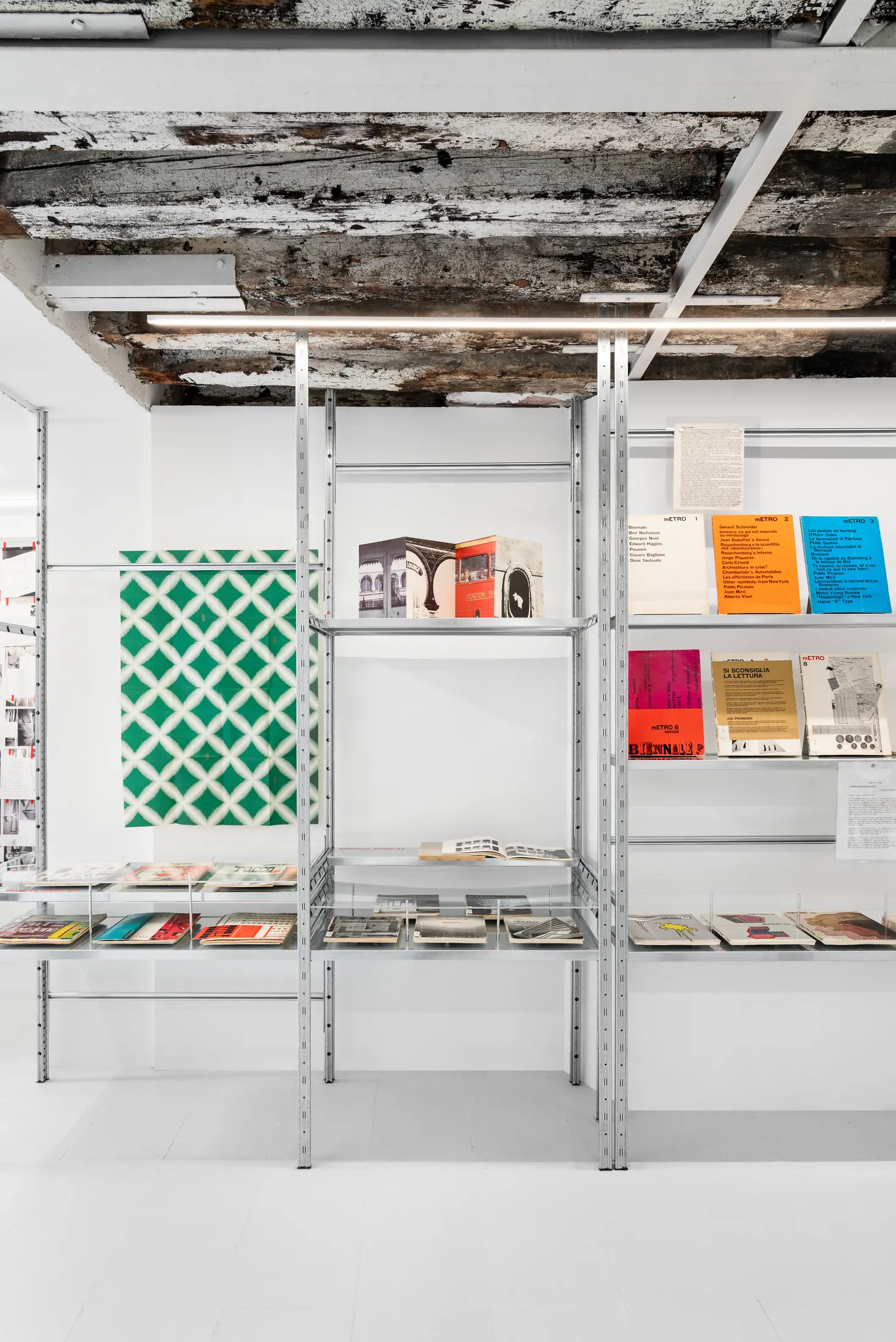
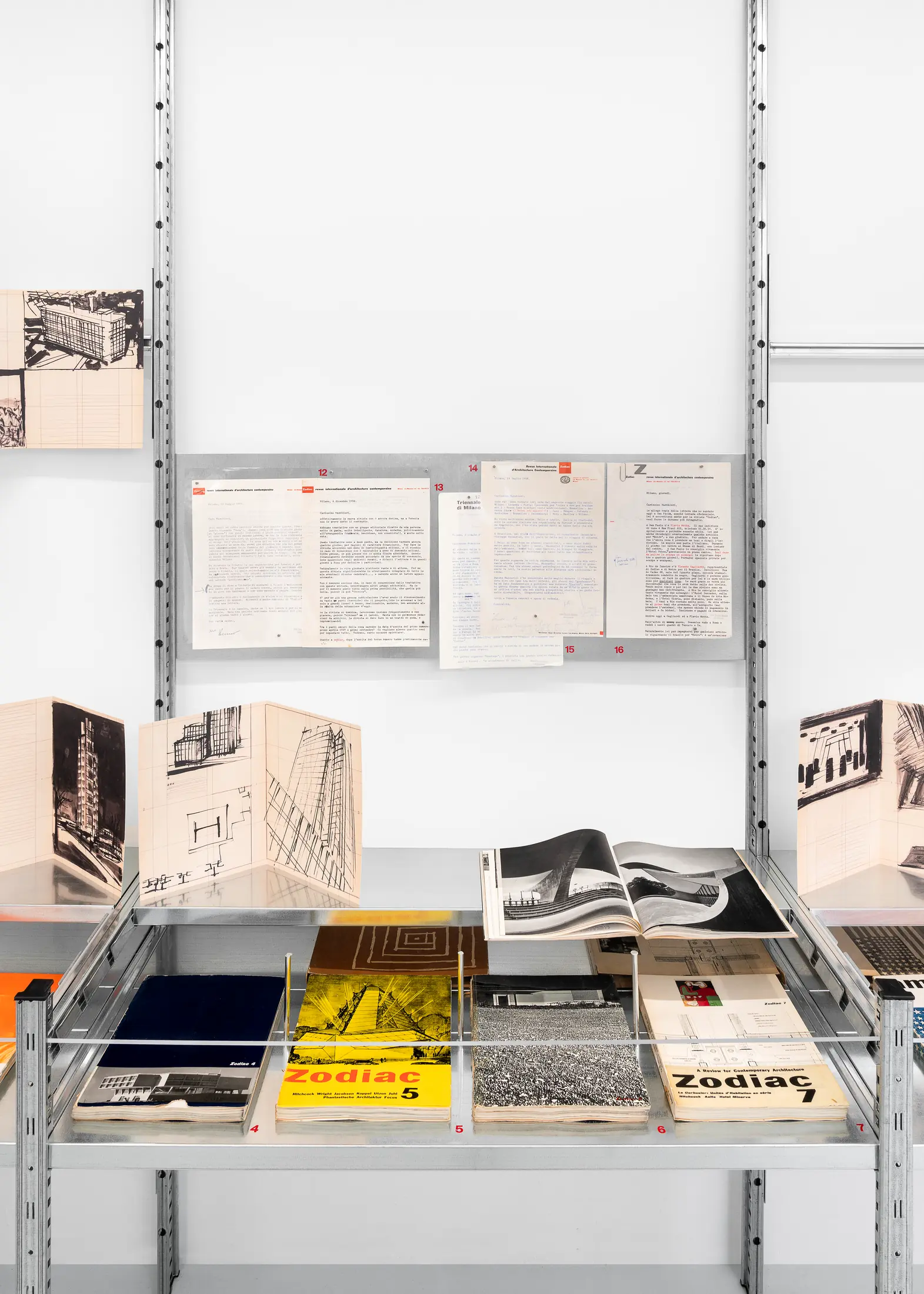
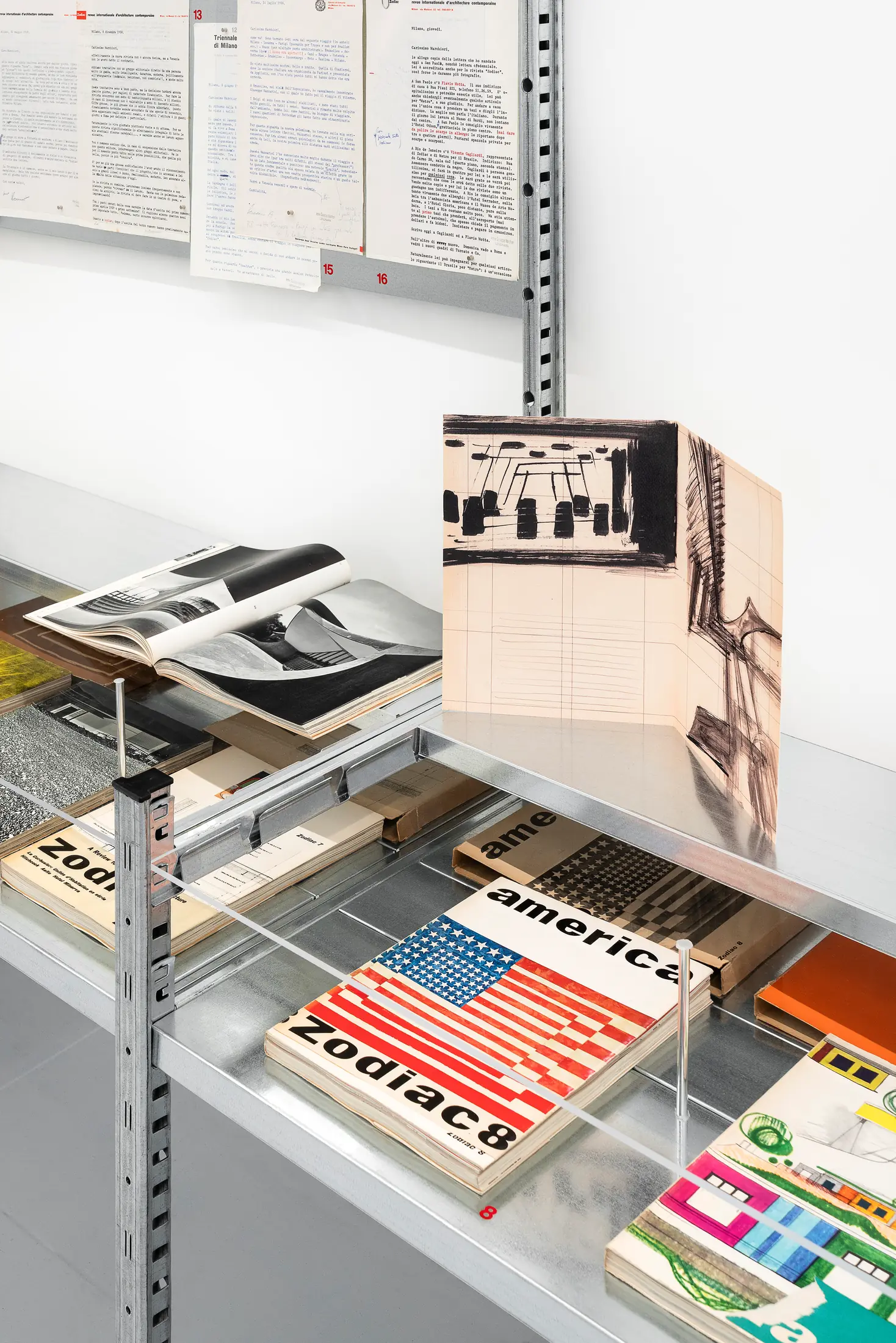
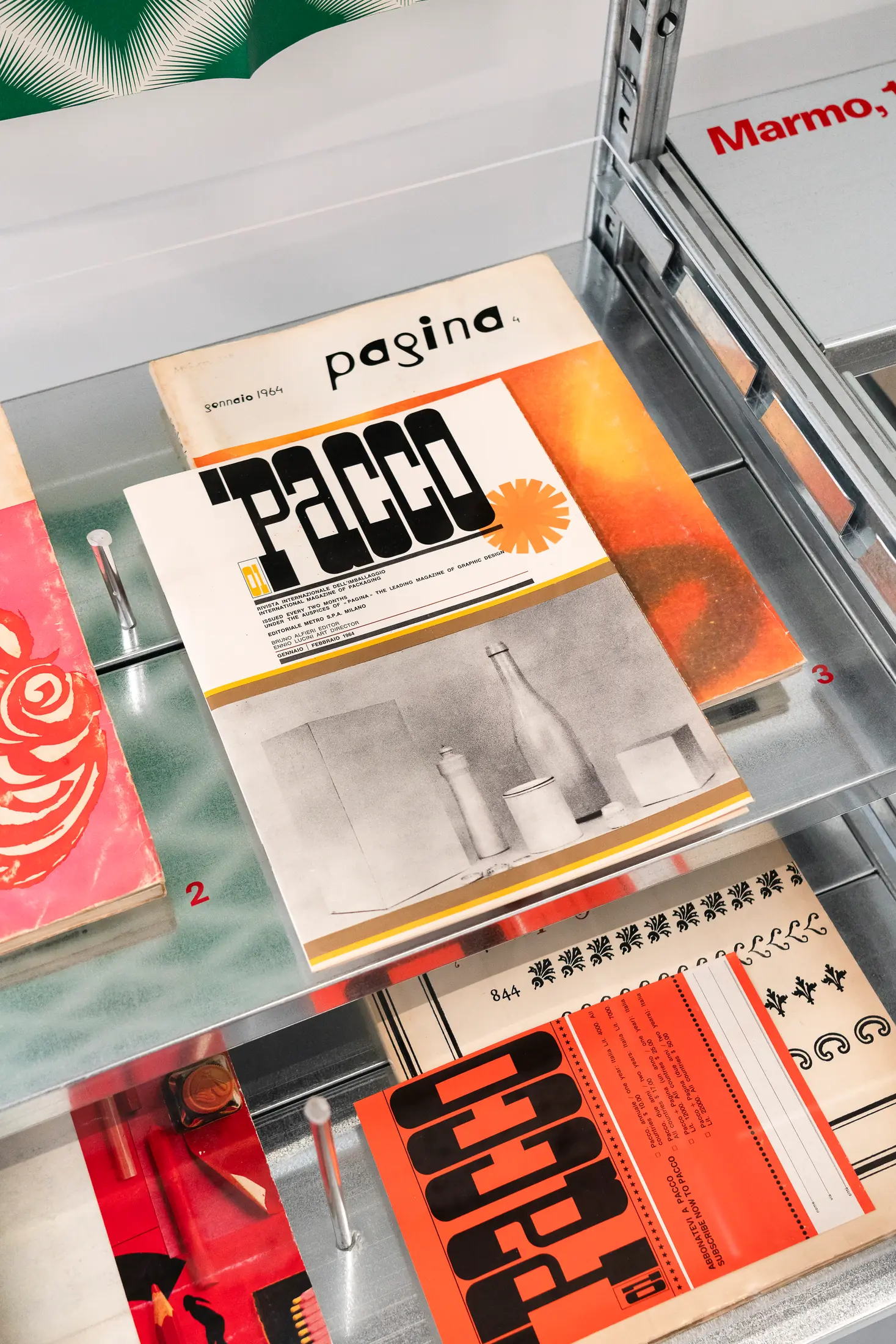
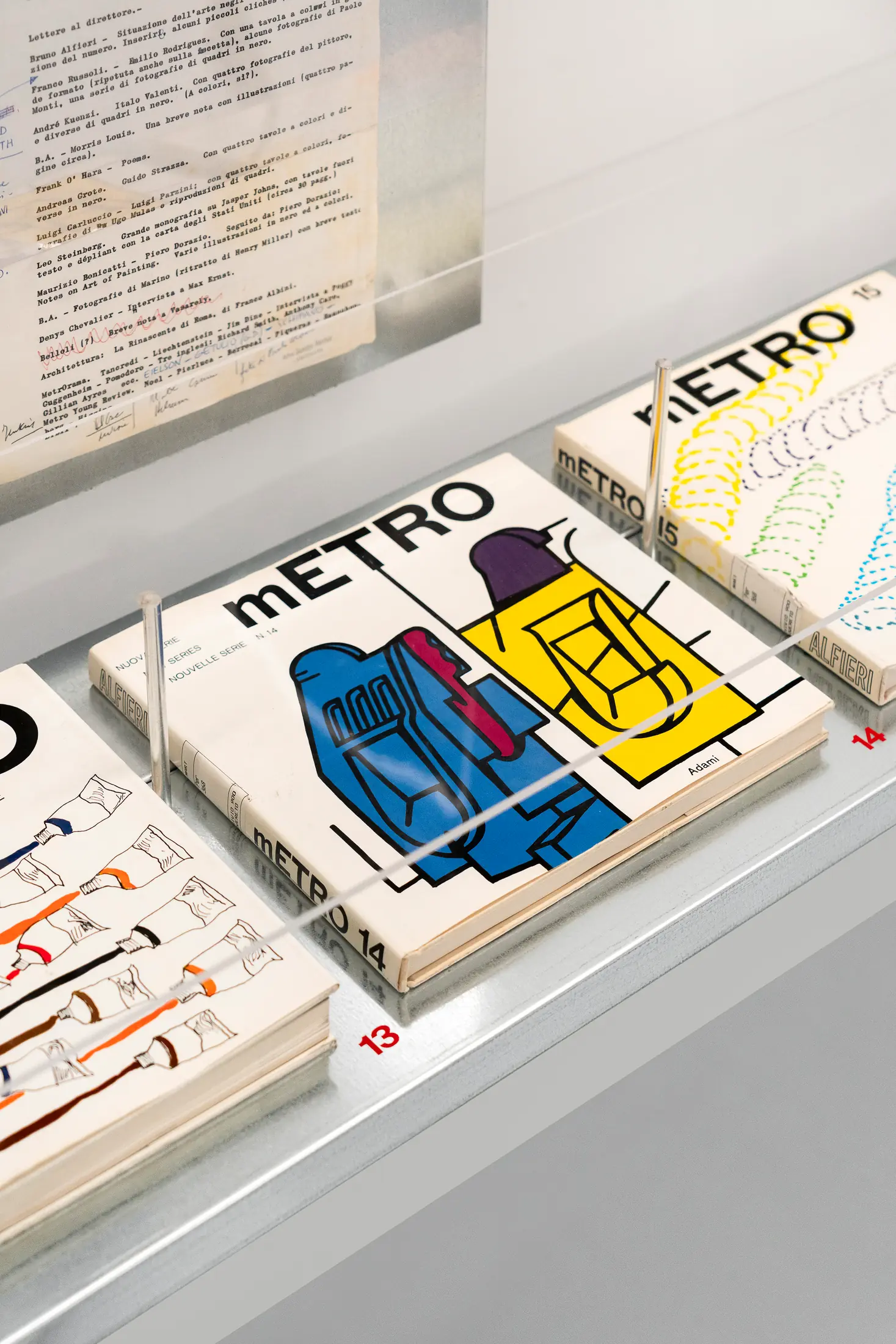
These principles permeate the many editorial formats featured in the exhibition, which convey the sense of a total artwork – carefully designed and constructed—as though every magazine Alfieri created was a refinement of one grand, overarching project. This “super-magazine” took on many forms: Quadrum (1956) and Metro (1960) for the visual arts; Zodiac (1957) and Lotus (1963) for architectural research; Marmo (1962) as a bridge between art and architecture; and more experimental platforms like Pagina and Pacco (1962), where Alfieri collaborated with graphic designers or even designed original formats himself, like the “imperfect square.”
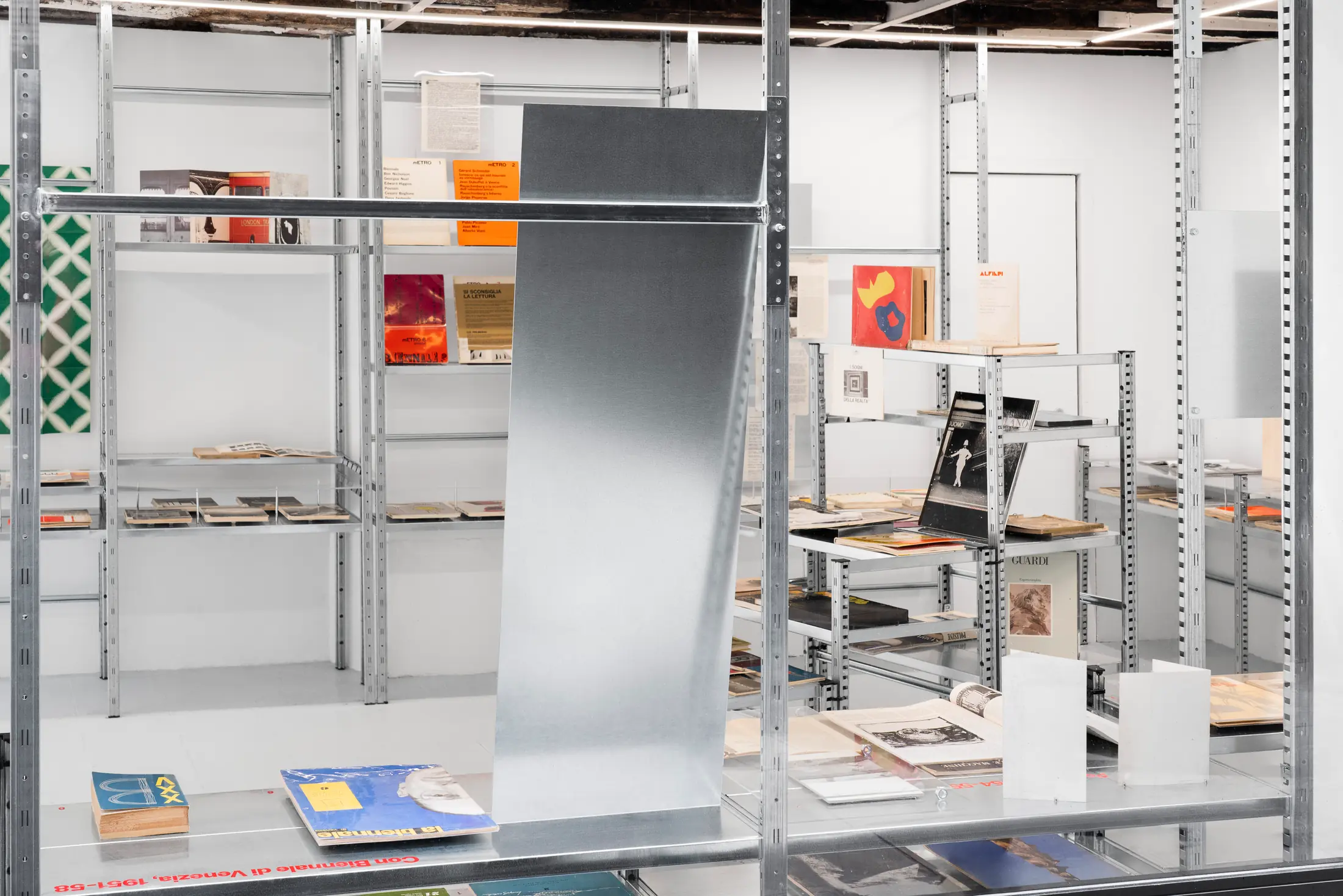
The exhibition underscores this hybrid nature of the publishing arts, which has become one of the most meaningful modes of artistic expression. Alfieri was a pioneer of this hybrid approach, driven not by service but by invention – each editorial project was an authored act aimed at defining project cultures and the systems of the arts, provoking collisions across disciplines. His publications didn’t declare authority through manifestos, but rather became spaces of care – for how text and image were displayed and juxtaposed to generate enchantment and networks of relations. This same philosophy informs the exhibition’s layout, which is designed to support hybrid thinking and foster new relational dynamics.
Finally, the exhibition is a temporary reconstruction of an archive that, until now, has never existed – a constellation of materials that have never before shared the same space. It was made possible through access to and collaboration with various archives and libraries, whose engagement enabled this unique assemblage.
×Bruno Alfieri (Naples, 1927 – Milan, 2008) was a publisher, critic, and gallerist at the heart of Italy’s publishing history from the post-World War II era through the late 1990s. Splitting his life between Milan and Venice, he worked alongside his father, who had been director of the Fratelli Treves publishing house and later founded Alfieri Edizioni d’Arte and the Serenissima bookshop in Venice in 1938.
In 1948, the Alfieri family was entrusted with editing the journal Arte Veneta, followed by the magazine La Biennale di Venezia, after the Biennale organization commissioned them to publish the official catalogs for the 1948, 1950, and 1952 international exhibitions. Bruno Alfieri began his career by authoring the first Italian volume dedicated to Paul Klee (1948) and editing the catalog for Peggy Guggenheim’s collection, presented at the 24th Venice Biennale.
In 1949, he co-founded the collective Le Tre Mani with Giuseppe Marchiori and Oreste Ferrari, curating exhibitions on Edouard Pignon and Jackson Pollock (1950). He then oversaw a series of artist monographs featuring figures such as Picasso, De Chirico, and Delvaux. This editorial initiative continued into the 1960s and 1970s with volumes dedicated to Santomaso, Licini, Dorazio, Viani, and Balla.
From 1950, he began experimenting with magazines, starting with the one-off issue L’Arte Moderna, followed by Posizione (1954), and collaborations with Comunità, Civiltà delle Macchine, Stile, and Industria. He went on to launch new journals including Quadrum (1956), Zodiac (1957), L’Avviso (1958), Metro (1960), Pagina (1962), Marmo (1962), and Lotus (1963). He was also among the founders of ADI (Associazione per il Disegno Industriale) and served as head of press for the Triennale di Milano between 1959 and 1960.
In 1967, he succeeded his father as director of Alfieri Edizioni d’Arte, and in 1968 he opened the Alfieri bookshop-gallery in Calle Larga XXII Marzo in Venice.
In 1973, Alfieri Edizioni d’Arte was sold to Industrie Grafiche Editoriali—later to become the Electa Publishing Group. Alfieri remained vice-president until 1979, when he founded the independent publishing house Automobilia.
×