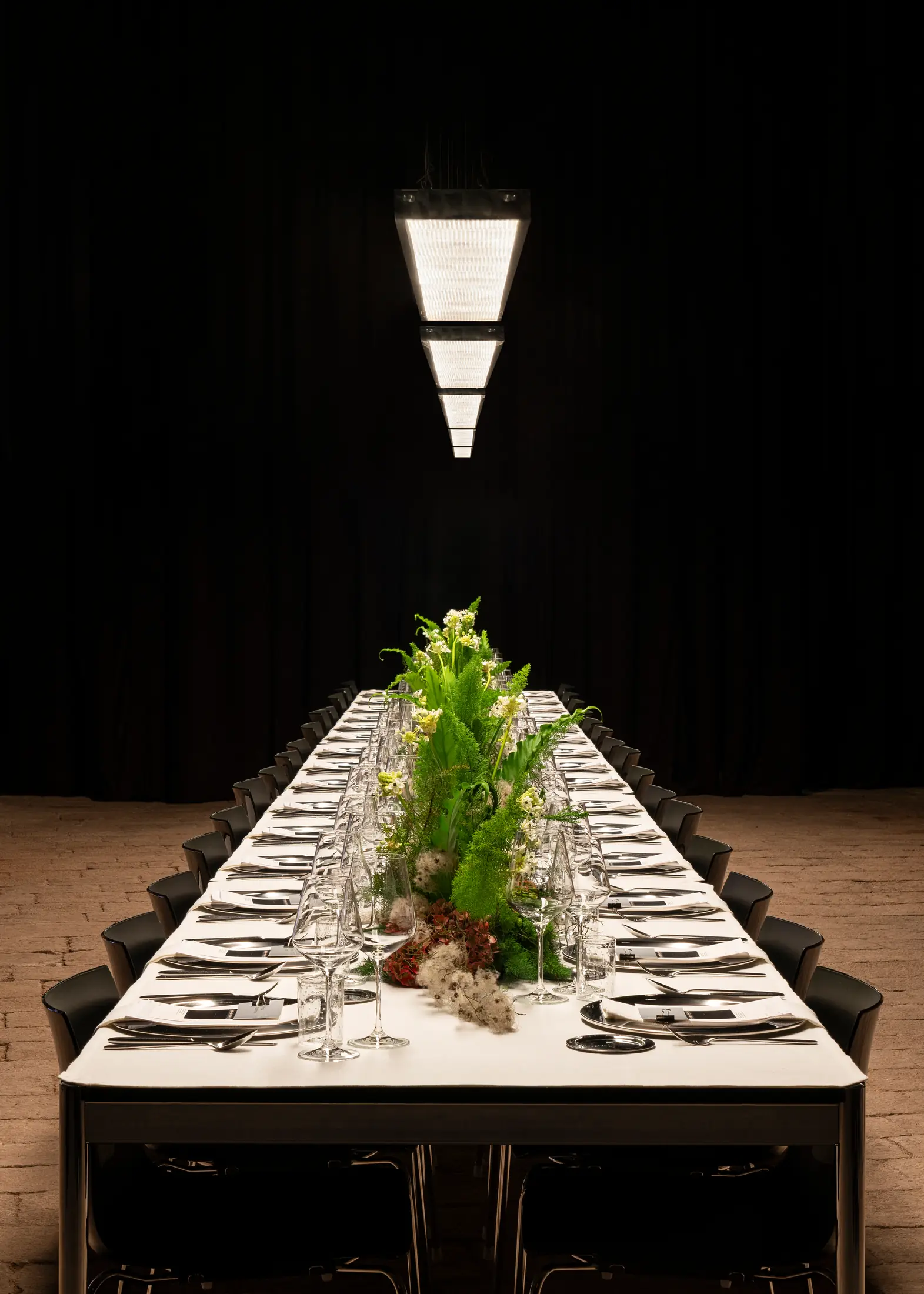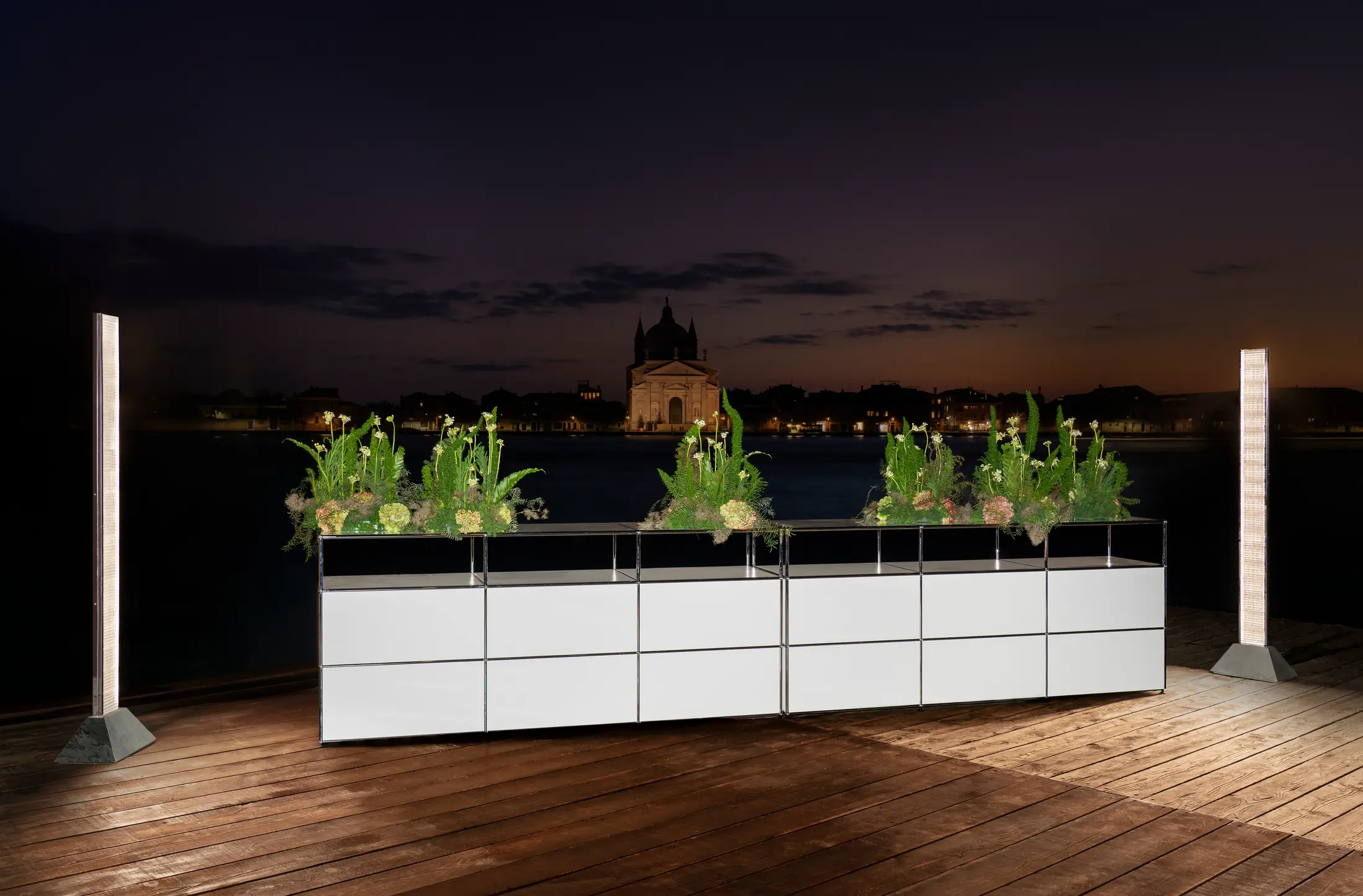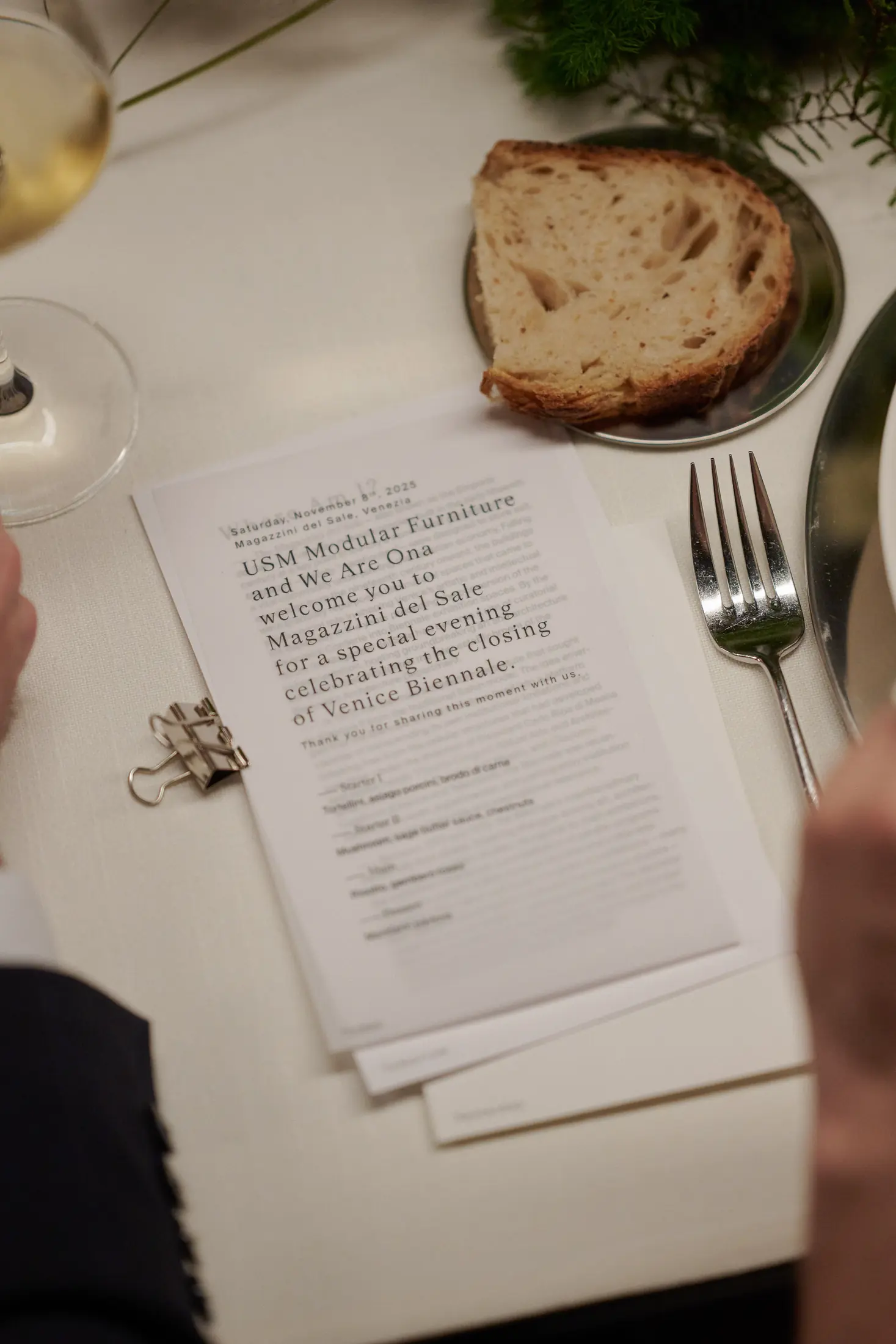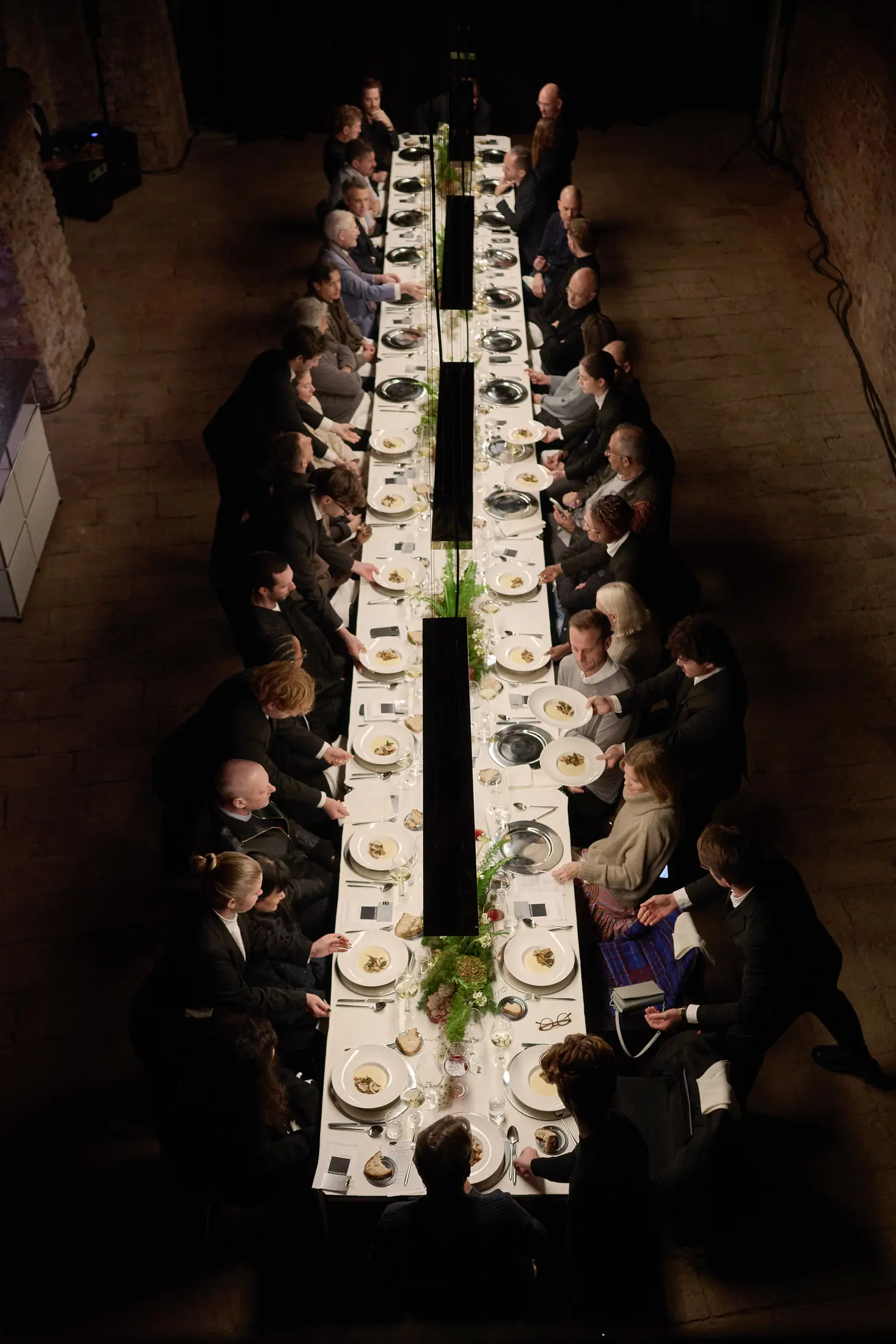
Private Dinner: We Are Ona / USM
The Magazzini del Sale – also known as the Emporio dei Sali – is a venetian historic complex, built in the early fifteenth century at a key point in the city’s commercial geography. The Magazzini – literally “warehouses” – were designed to store salt, a vital commodity underpinning the Venetian economy. Falling into disuse from the nineteenth century onward, the buildings were gradually repurposed into cultural spaces that came to play a crucial role in shaping Venice’s artistic and intellectual life especially in the years preceding the conversion of the Arsenale’s Corderie into Biennale exhibition spaces. By the 1970s, the Magazzini del Sale had become a site of curatorial experimentation, hosting groundbreaking art and architecture exhibitions that anticipated the later establishment of the Biennale’s Architecture Department.
In 1973, the Biennale adopted a new statute that sought to distance it from the traditional Salon model. The idea emerged that the Biennale should transform itself into a platform capable of transcending its own institutional limitations and breaking free from the cellular structures that had developed over time. Under the direction of President Carlo Ripa di Meana and sector heads Vittorio Gregotti (Visual Arts and Architecture), Luca Ronconi (Theatre and Music), and Giacomo Gambetti (Cinema and Television), the Biennale was reconceived as an open, experimental, and participatory institution reimagining its social role and international relevance.
Between 1975 and 1976, the Biennale’s interdisciplinary model fully took shape, fostering dialogue among art, architecture, design, and urban studies. Alongside its main exhibitions, the institution introduced a constellation of parallel programs intended to make it “a little more productive and a little less receptive.” This vision took form in a series of exhibitions – many later regarded as seminal in curatorial and museum studies – staged across six locations. Among these were The Bachelor Machines, curated by Harald Szeemann (1975), and Europa/America. Historic Centre – Suburb (1976), both hosted in this space where we now sit, Magazzini del Sale.
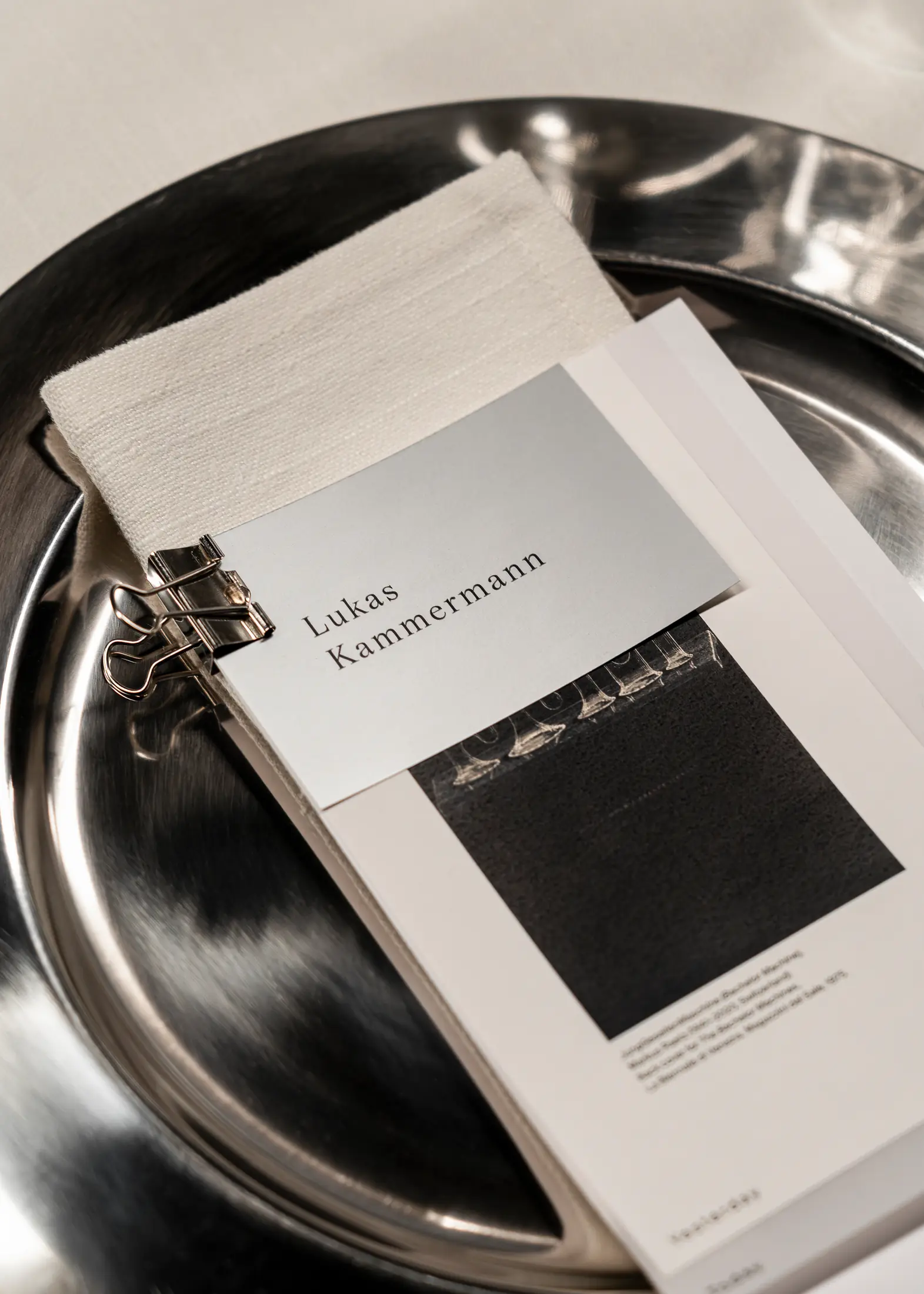
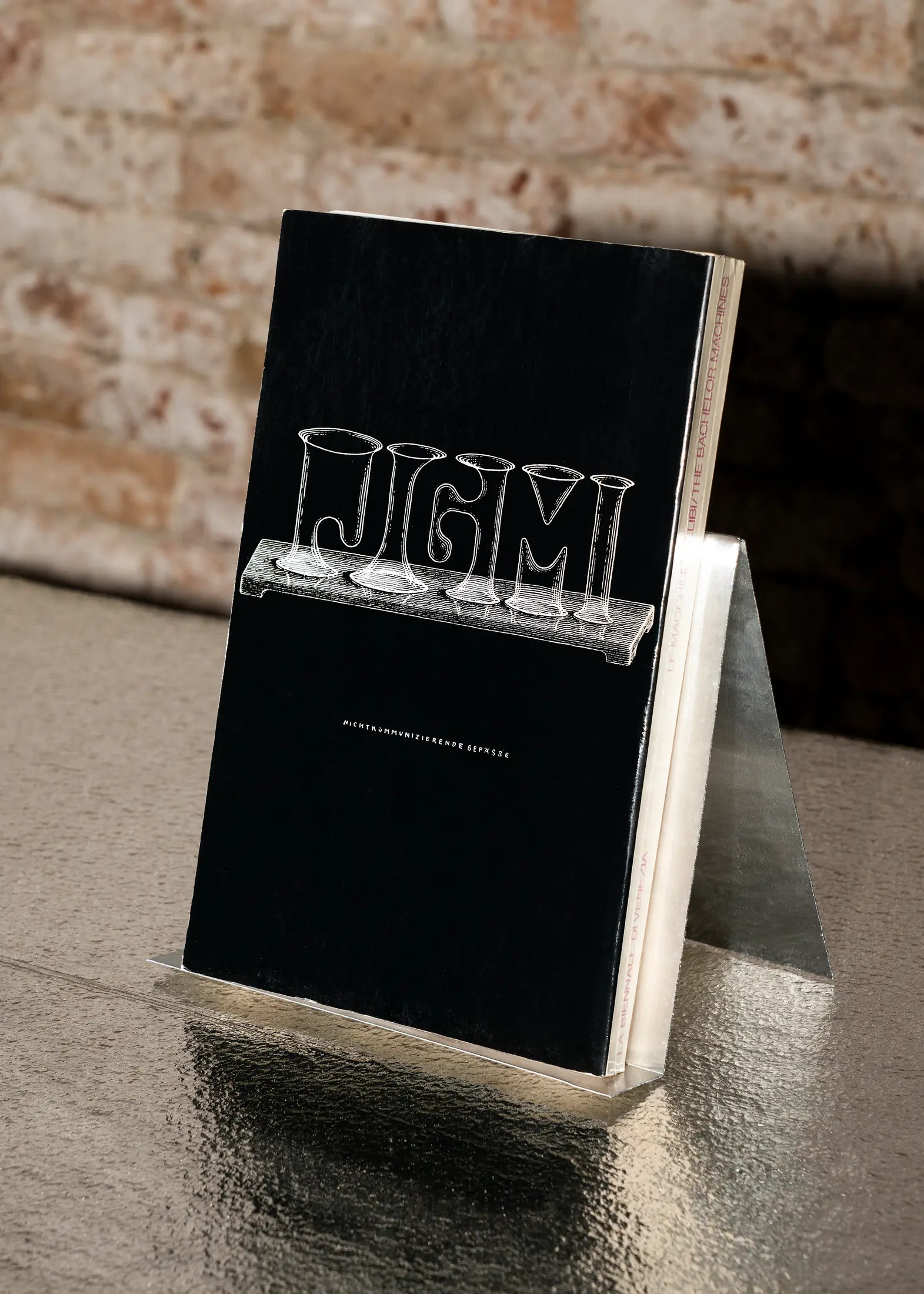
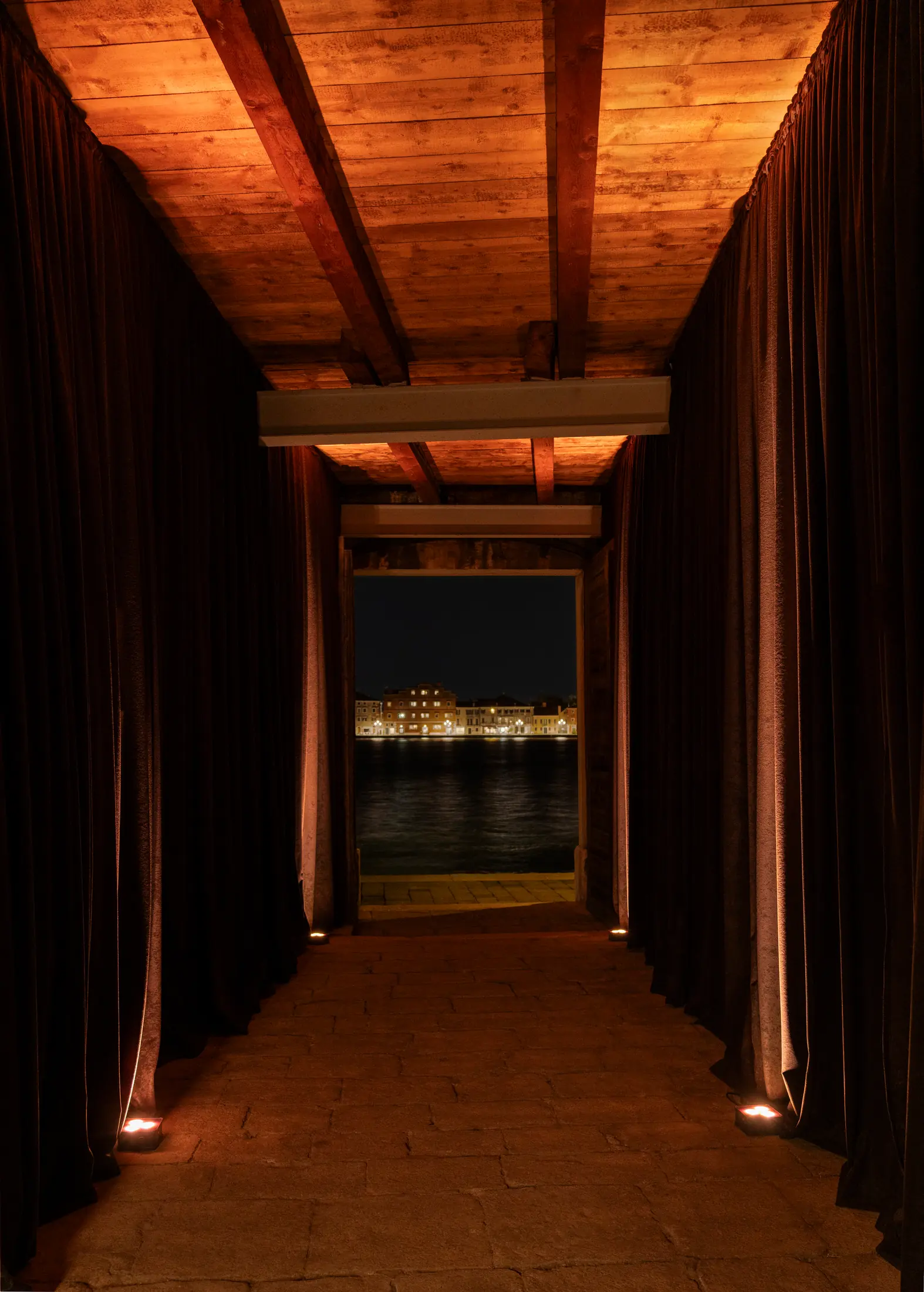
Tonight, this room resonates with a faint echo of Szeemann’s show. The image by Markus Raetz, inspired by the acronym Die Junggesellenmaschinen (The Bachelor Machines), which you have just seen, appears on the back cover of the exhibition catalogue. Evocative and enigmatic, it served as a point of departure for the visual research that informed tonight’s scenography.
Originally conceived as a traveling exhibition, The Bachelor Machines was first presented at Kunsthalle Bern before being installed at the Magazzini del Sale from 6 September to 4 November 1975, exactly fifty years ago. Its title referred to a work by Marcel Duchamp, today known as The Large Glass, but originally titled The Bride Stripped Bare by Her Bachelors, Even.
The exhibition examined the myth machine’s self-determination and the intersection of love, desire, and technology. It gathered kinetic sculptures defined by absurd, non-functional motions –“bachelor” machines precisely because they expended energy without producing anything useful – a poetic critique of industrial logic and productivity.
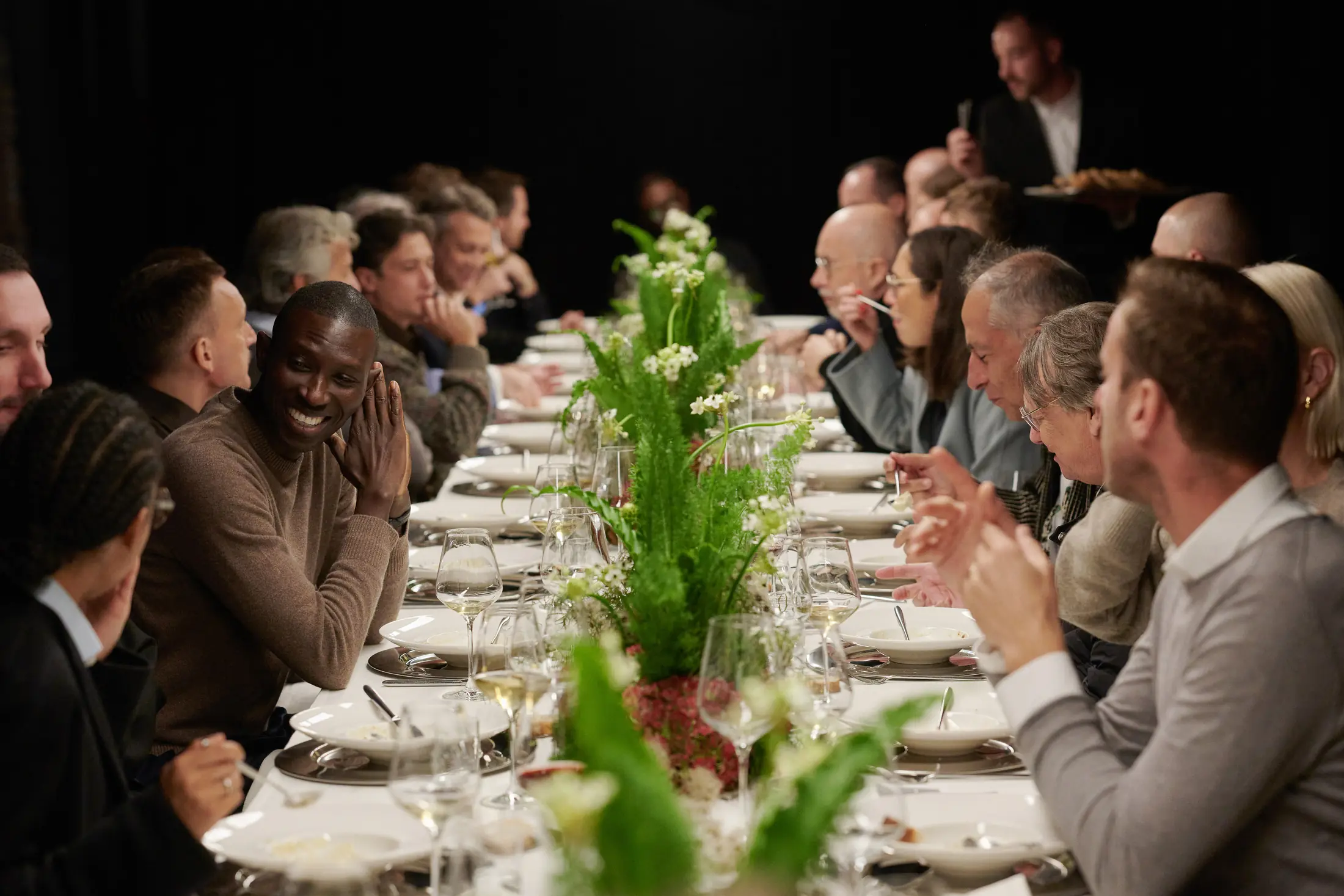
This dinner unfolds within a space layered with histories: a Venice once defined by mercantile power, embodied in its architecture and trade infrastructures; and a twentieth-century Venice that reimagined itself as a laboratory for cultural experimentation.
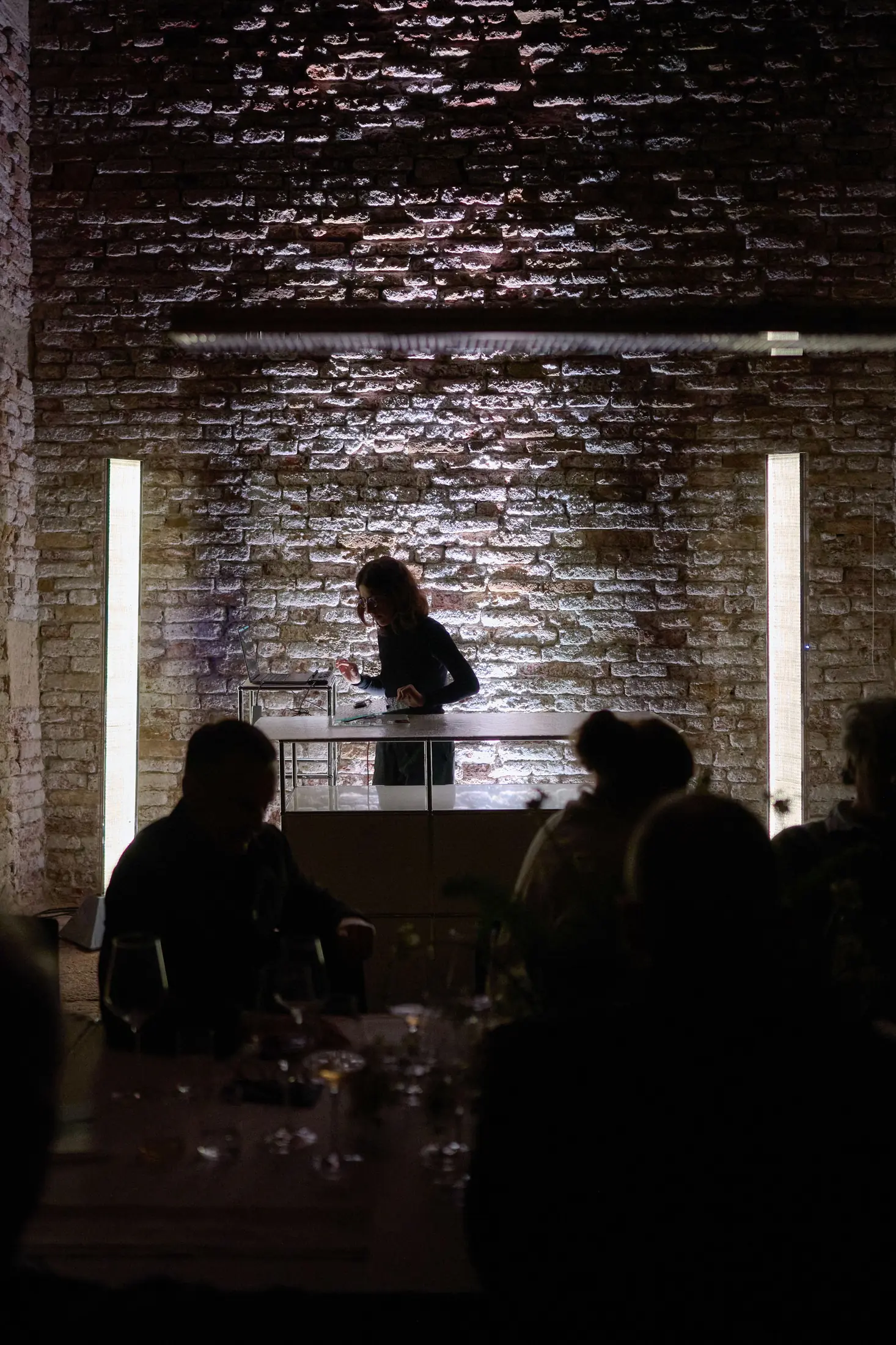
It is this enduring capacity for reinvention that continues to shape the very meaning of cultural creation in Venice today, mirroring the city’s evolving directions in contemporary visual culture and design. Heartfelt thanks to 6:AM, Yali Glass, and Mare Karina, whose work exemplifies the vitality of this creative landscape.
×